Artificial Plant Quality Standards: A B2B Inspection Checklist Before You Import
Most complaints in the artificial plant trade do not come from bad designs — they come from quality standards that were never written down. A buyer approves one sample, a container ships, and the goods arrive slightly greener, slightly thinner, or packed differently than expected. This article gives wholesale buyers and project purchasing teams a practical inspection checklist: what to standardize, what to measure, and what to confirm with your supplier before the purchase order is signed.
1. Material and construction: know what you are buying
Every artificial plant is a combination of materials, and each behaves differently:
- Leaves: usually PE (plastic) or fabric (silk-effect). Real-touch PE leaves feel soft and matte; fabric leaves fold flat for packing but crease more easily.
- Stems and branches: wire-core plastic or paper-wrapped trunks, sometimes with natural wood for large trees.
- Pots and bases: cement, plastic, or none — bundles are often supplied pot-free so buyers pot them locally.
Write the material breakdown into the purchase order, not just "as sample". A real-touch monstera bundle in PE and a cheaper PVC version can look identical in photos but perform very differently on a hotel floor.
2. Real-touch quality: what "good" actually means
"Real-touch" is the most over-used word in this industry. In practice, verify three things against the approved sample:
- Surface texture — matte, slightly porous feel, not glossy plastic shine.
- Leaf flexibility — leaves should bend and hold a soft curve, not spring back like a wire.
- Color layering — good real-touch leaves use multi-tone printing or dip-dye gradients, not one flat green.
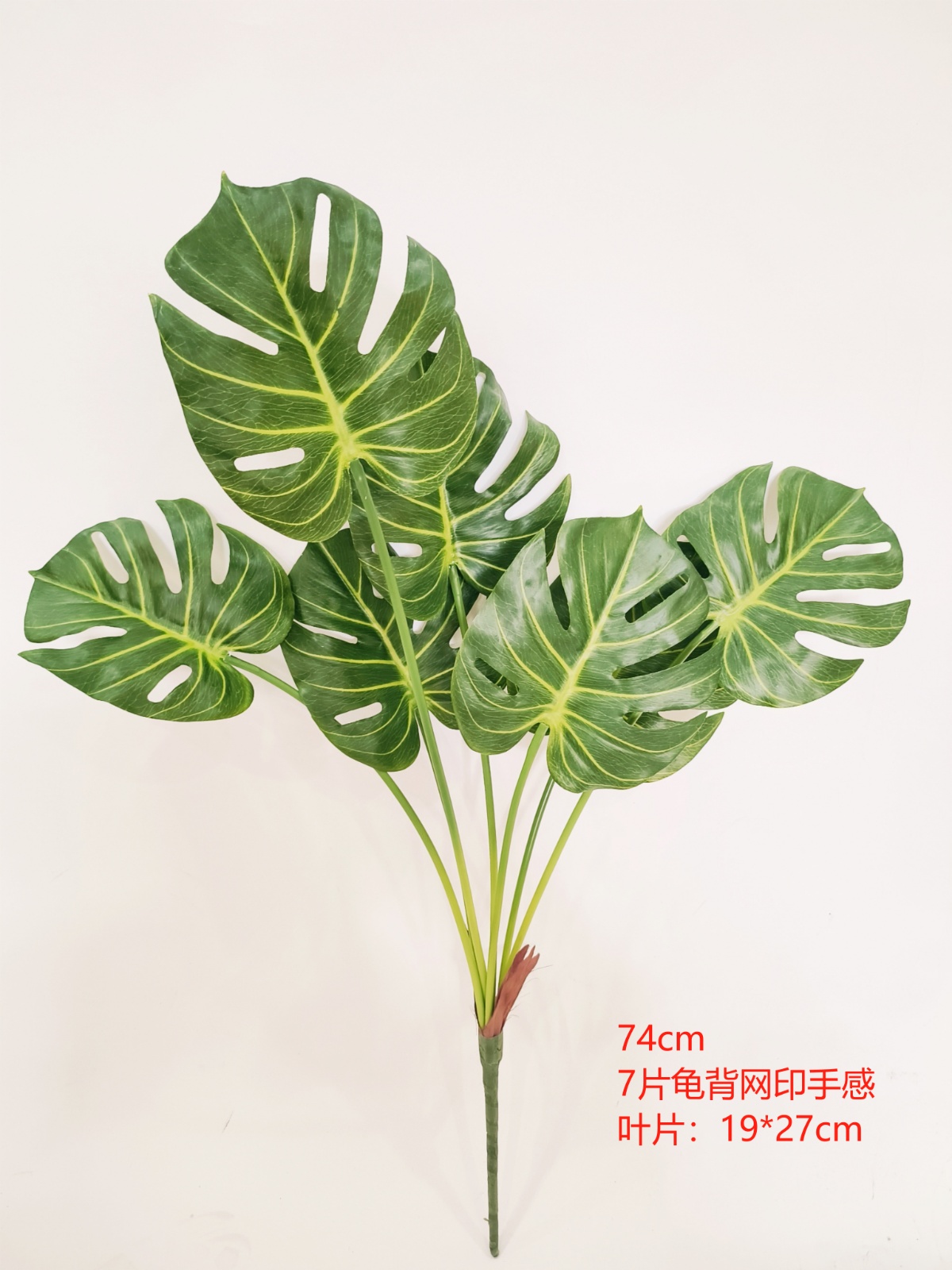
Our catalog, for example, separates bundles into printed-film series (带杆叶类) and genuine real-touch series (手感叶类) — codes such as xj10255Abs (29" 7-head monstera, GR/H1003 green) belong to the real-touch line. Ask which line your order falls into.
3. UV resistance and colorfastness: confirm per project, not per catalog
Sunlight through a shopfront window, a hotel atrium, or an outdoor walkway are three different environments. Standard indoor materials will fade within months under direct UV. When your project involves strong daylight:
- State the installation environment in writing (indoor shaded / indoor sunlit / outdoor covered / outdoor exposed).
- Ask for a UV-stabilized or colorfast material option for that order.
- Confirm the outcome — including any test reports or warranties — according to the destination country and project specifications, since requirements vary by market and application.
Never assume a catalog product is automatically UV-safe. It is almost never the default.
4. Size and specification tolerances
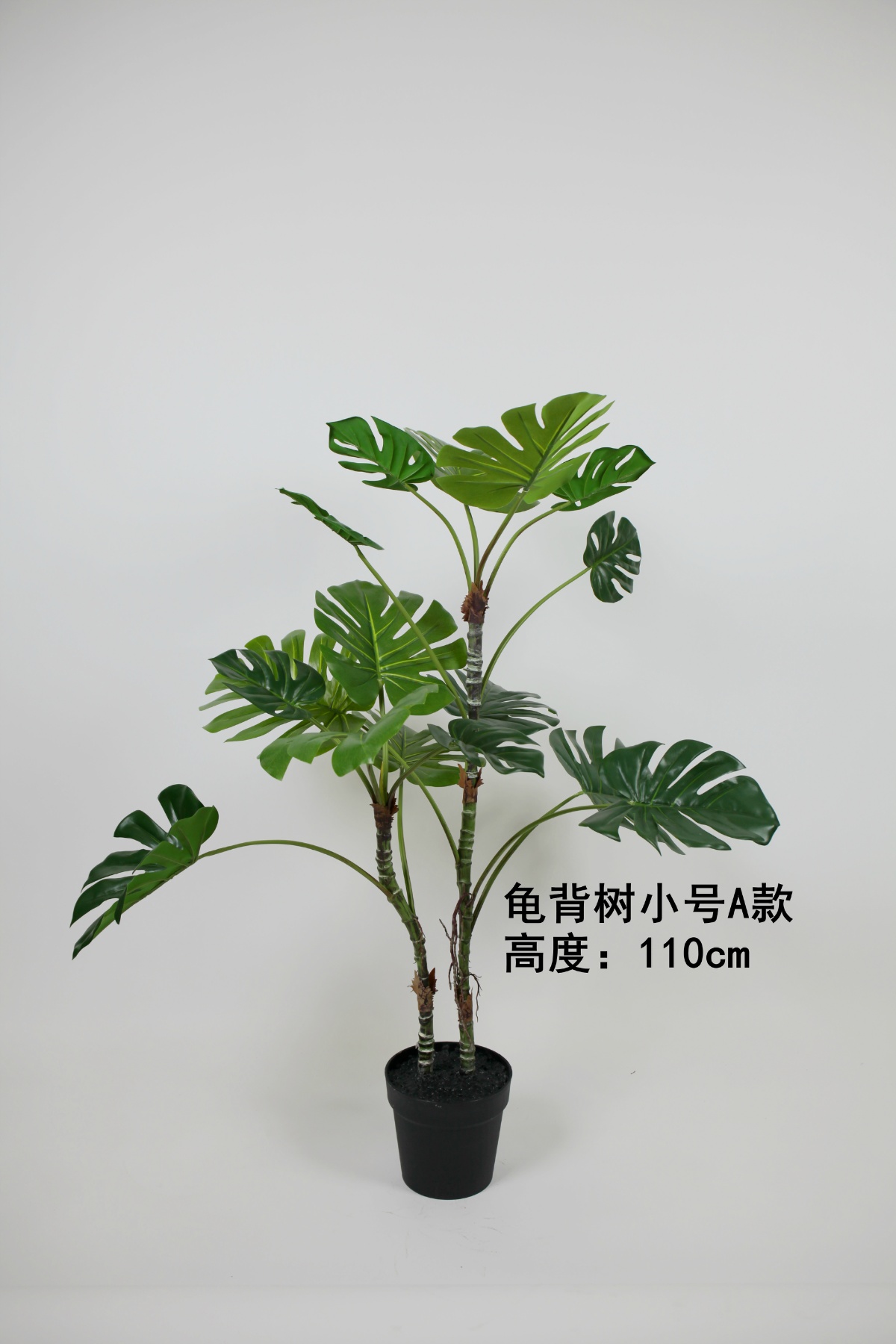
Product pages give a nominal size (for example, XJ04012-1: 110 cm monstera, 4 pcs per carton). But check what that number measures — total height with the stem, or foliage spread? For bundles, also note the head count (a "7-head" bundle has seven leaf clusters) and whether the size is per leaf or per stem.
Agree a tolerance with the supplier, commonly ±2–5% on height. Without a written tolerance, a 108 cm delivery against a 110 cm order is technically a dispute.
5. Packing: the hidden half of your landed cost
Packing determines freight, warehouse handling, and how the product survives transit. Standardize these four figures for every SKU:
| Item | Example | Why it matters |
|---|---|---|
| Pcs per carton | 4 pcs (110 cm monstera) / 24 pcs (29" bundle) | Unit freight and reorder math |
| Carton CBM | ~0.136 m³ (monstera) / ~0.26 m³ (bundle) | Container planning |
| Gross weight | per carton | Freight quote accuracy |
| Packing style | leaves folded flat vs. pre-shaped | Retail-ready vs. max-quantity |
Flat-packing squeezes more units per carton, but fabric leaves need re-shaping on arrival — fine for a project contractor, annoying for a retail shelf. Decide which you are optimizing for and put it in the order.
6. Color codes: the cheapest dispute you will ever prevent
Random color drift between production batches is the number one cause of complaints in this trade. The fix costs nothing:
- Every SKU should carry an internal color code (ours include GR/H1003 green, GR/H1003-1 dark green, Y5506, CF wine red, and others).
- Quote the exact code on the purchase order — "green" is not a specification.
- Keep one sealed golden sample per color; production must match it.
7. Compliance paperwork: confirm, don't assume
For customs and project tenders you will typically need the HS code, packing list, and commercial invoice; some markets add labeling or safety requirements. Certificate requirements differ by destination country and end use — confirm what is actually needed for your destination country and project specifications with your supplier before signing, and record it in the order terms.
8. A 10-point pre-order checklist
Copy this into your next RFQ:
- Approved sample reference number, sealed.
- Material breakdown (leaf / stem / pot / coating).
- Real-touch or printed-film series, by SKU.
- Exact color code per SKU.
- Nominal size + agreed tolerance.
- Pcs per carton and carton dimensions (L×W×H).
- Carton CBM and gross weight.
- UV / colorfast requirement stated per installation environment.
- HS code and required documents per destination country.
- Inspection method: sample comparison on arrival, AQL, or full check.
Next step
The fastest way to de-risk an order is to match real SKUs against this checklist. Browse the wholesale catalog — every product page lists specs, packing and color codes — or read our guides on MOQ and shipping and real vs. artificial total cost.