Hotel lobbies are one of the hardest interiors to keep planted. Ceilings are tall, daylight may be limited to a few hours along one facade, and the plants sit in air-conditioned space where nobody is around to water them on a Sunday. This guide covers what actually matters when you specify artificial plants for a lobby, and where the common mistakes happen.
Start with height, not species
The single most common specification error in lobby planting is choosing a species first and a height second. It should be the other way around, because height is what the design depends on.
A lobby reads as designed when planting follows the room's vertical rhythm. Three bands matter:
- Low fill, 30-70cm — tabletop and planter-edge pieces. These soften hard surfaces and are the cheapest part of the order.
- Mid layer, 80-140cm — floor planters beside seating and along corridors. This is where most of the visual mass comes from.
- Anchor specimens, 150-220cm — one per grouping, at entrances, reception and elevator banks.
Most lobbies need roughly two mid-layer pieces for every anchor specimen, and three or four low pieces for every mid piece. If you order only tall trees, the space looks sparse and staged; if you order only small plants, nothing registers from across the room.
Species that survive a lobby
Not every species photographs well at 2 metres. These are the ones that hold up in commercial interiors:
| Species | Best height band | Why it works in a lobby |
|---|---|---|
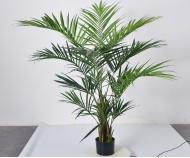
| Areca palm | 180-200cm | Dense fronds fill height without needing width |
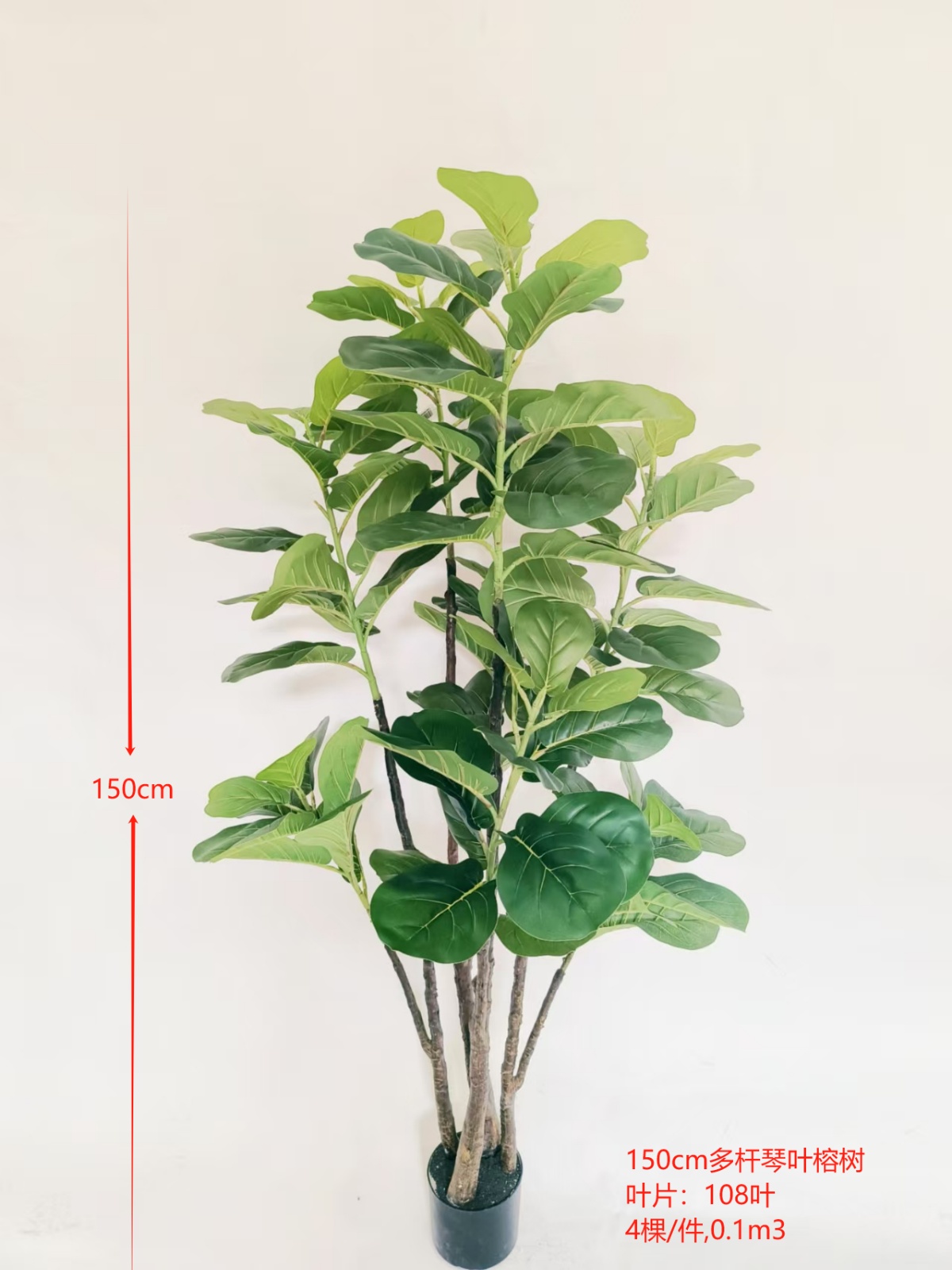
| Ficus lyrata | 150-180cm | Large leaves read clearly from a distance |
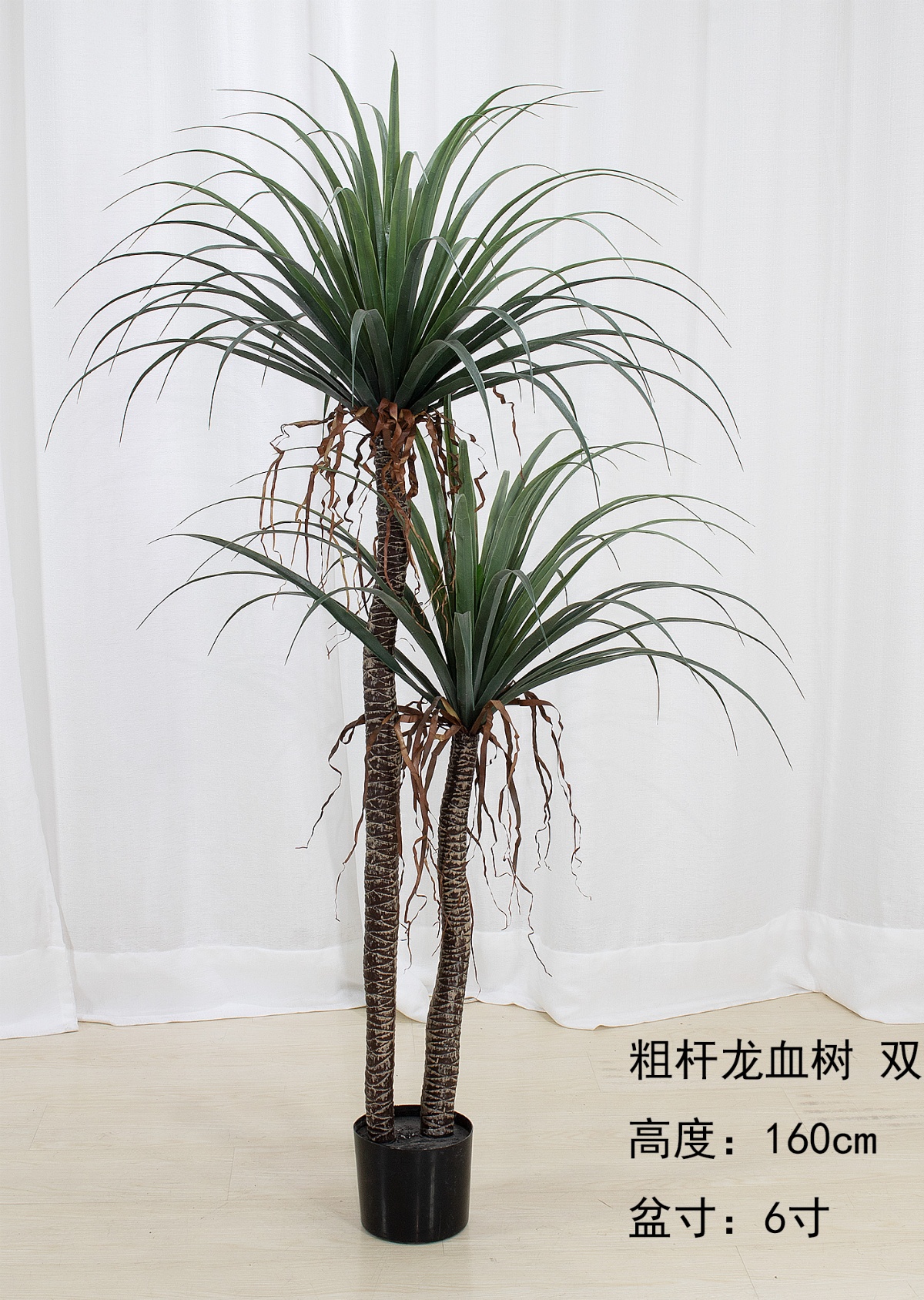
| Dracaena marginata | 140-180cm | Upright habit fits tight corners and corridors |
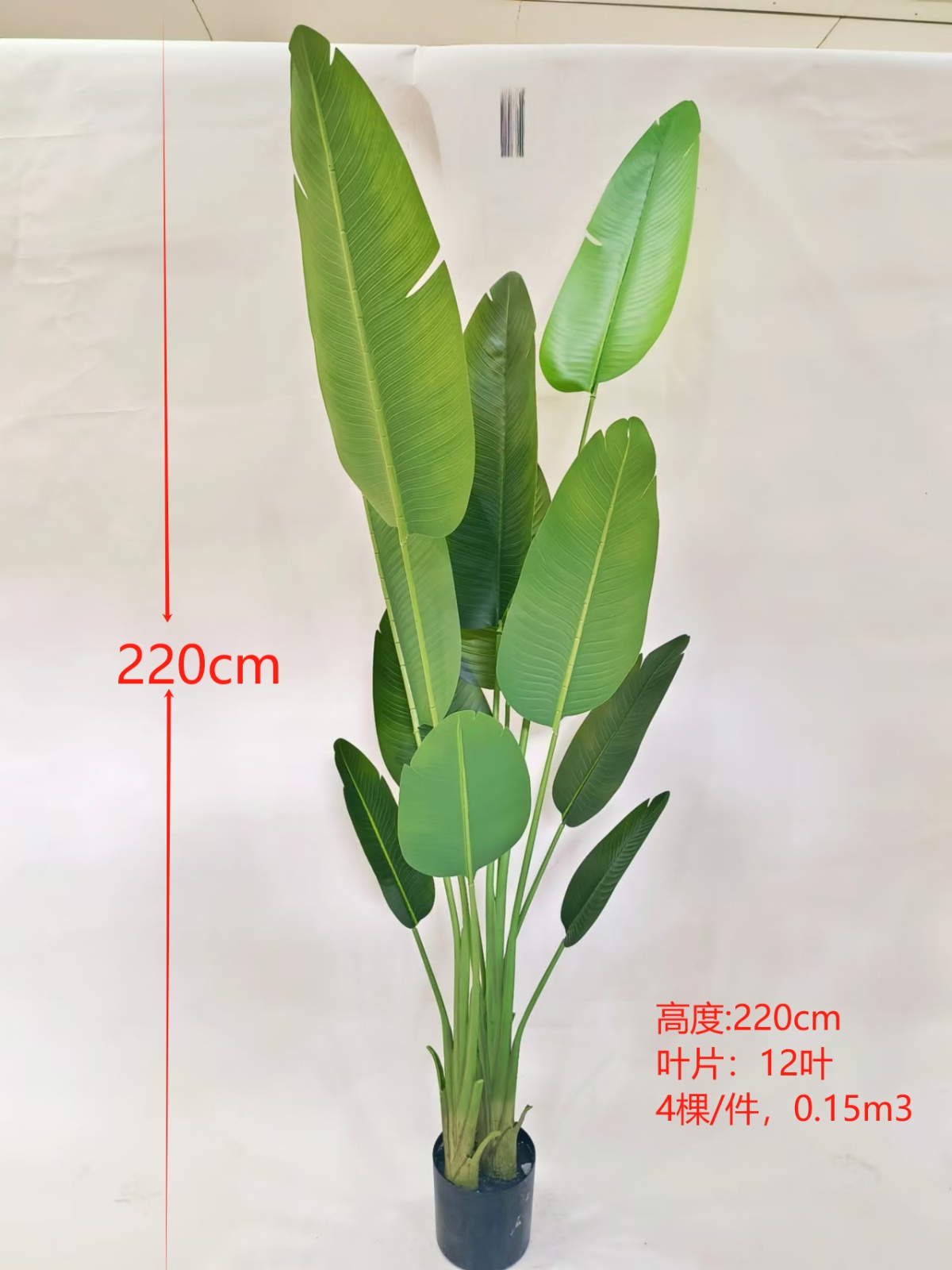
| Traveller's palm | 200-220cm | Architectural fan shape works as a focal point |
| Monstera | 90-120cm | Recognisable silhouette, good for mid-layer clusters |
| Calathea | 140-180cm | Broad patterned leaves brighten low-light corners |
Two practical notes that rarely make it into specification sheets. First, multi-stem and multi-head constructions fill a space far better than a single stem of the same height — for a lobby you generally want 4-piece bundles or multi-stem pieces, not single stems. Second, if the lobby has no ceiling height to spare, an upright species at 160cm will read taller than a spreading species at 180cm.
Fire rating: ask before you order
This is the point where lobby projects differ most from residential or office work, and it is the one that causes the most expensive mistakes.
Many countries require that foliage installed in commercial interiors — hotels included — meet a fire-retardant specification, and some local authorities will ask for documentation at handover. Requirements differ substantially by market, and a certificate that satisfies one destination may mean nothing in another.
The practical approach is to tell your supplier the destination country and the project specification before the order is placed, not after. Ask specifically what documentation is available for the exact SKU you are buying, rather than assuming a general industry claim applies. If a supplier answers vaguely, treat that as information about the supplier.
If fire certification is a project requirement, confirm it in writing at the quotation stage. Re-specifying after production is far more expensive than choosing a different SKU up front.
Read the carton, not just the unit price
For lobby work the unit price is only part of the landed cost. Two SKUs can look similar on a quotation and differ substantially once freight is applied, because artificial plants are bulky and you are paying to ship air.
Four figures matter:
- CBM per carton — the volumetric measure that determines how many pieces fit a container.
- Pieces per carton — lets you convert project quantities into carton counts.
- Carton dimensions — confirms the piece will fit the freight profile you have in mind.
- Net height after assembly — the spec height is often the assembled height; check whether the piece ships pre-assembled or requires shaping on site.
A note on loading quantity: a 40HQ will take substantially more of a 140cm bundle SKU than of a 220cm tree, and the difference is not proportional to the price difference. If your project needs both, mixing them in one container usually improves the overall freight rate per piece.
Design for the maintenance you will actually get
Artificial plants do not need water, but they do need attention, and lobbies are usually cleaned by staff with no instruction about the planting.
Three specification choices reduce that risk:
- Real-touch versus standard finish. Real-touch foliage has a softer, matte surface that reads convincingly from close range — appropriate where guests stand near it. Standard finish is more durable to repeated wiping and better where the piece is mostly seen from a distance. Neither is "better"; they suit different placement.
- Potted versus unpotted. Pot-included pieces are ready to place but lock you into the supplier's pot design. Unpotted pieces let you use a planter that matches the interior, and typically ship more densely — often the right choice for a fixed-scale project.
- Shape retention. Pieces with wired stems can be re-shaped on site after shipping. Check this if the design depends on a specific form, because a compressed carton will not spring back on its own.
How many plants does a lobby need?
Count groupings, not floor area. Walk the space and mark each point where planting logically belongs: every entrance, the reception counter, each seating cluster, the elevator bank, and any long wall that needs breaking up.
A grouping is usually one anchor specimen plus two to four mid or low pieces. A mid-size hotel lobby commonly ends up with 8 to 20 groupings depending on how many anchor points the plan has.
That is the number to bring to a supplier. It converts directly into a mixed order, and it tells the supplier what the design is actually trying to do.
If you are specifying a lobby project, send us the height bands, the destination country and your grouping count. We will come back with SKU recommendations, carton loading figures and the documentation we can provide for that market.