Artificial Trees for Commercial Spaces: A Specification Guide for Importers and Fit-Out Teams
Walk into a well-run hotel lobby, a flagship store, or a modern office reception and chances are the greenery you see is artificial — and specified deliberately, not as an afterthought. For importers, wholesalers, and fit-out contractors, commercial projects are where artificial trees earn the best margins and the most repeat business. But commercial buyers ask different questions than retail shoppers: How tall? How consistent across fifty stores? How much container space will this eat? This guide walks through where artificial trees work best and how to specify them without surprises.
Why commercial projects choose artificial trees
Live planting in commercial interiors fails for predictable reasons: air conditioning dries the air, interior zones get almost no daylight, watering crews are an ongoing cost, and one dead ficus in a lobby photograph is a branding problem. Artificial trees sidestep all of it:
- No light or irrigation requirements — they perform identically in a windowless corridor and a glass atrium.
- Visual consistency across locations — a chain that fits out 30 stores can order the same SKU batch and get the same look everywhere.
- Zero ongoing maintenance — occasional dusting is the whole program.
- Predictable budgeting — one purchase, no seasonal replacement cycle.
That last point matters to procurement teams: a tree specified once and correct for years is cheaper than a live-plant service contract, even before you compare purchase prices.
Hotels and hospitality
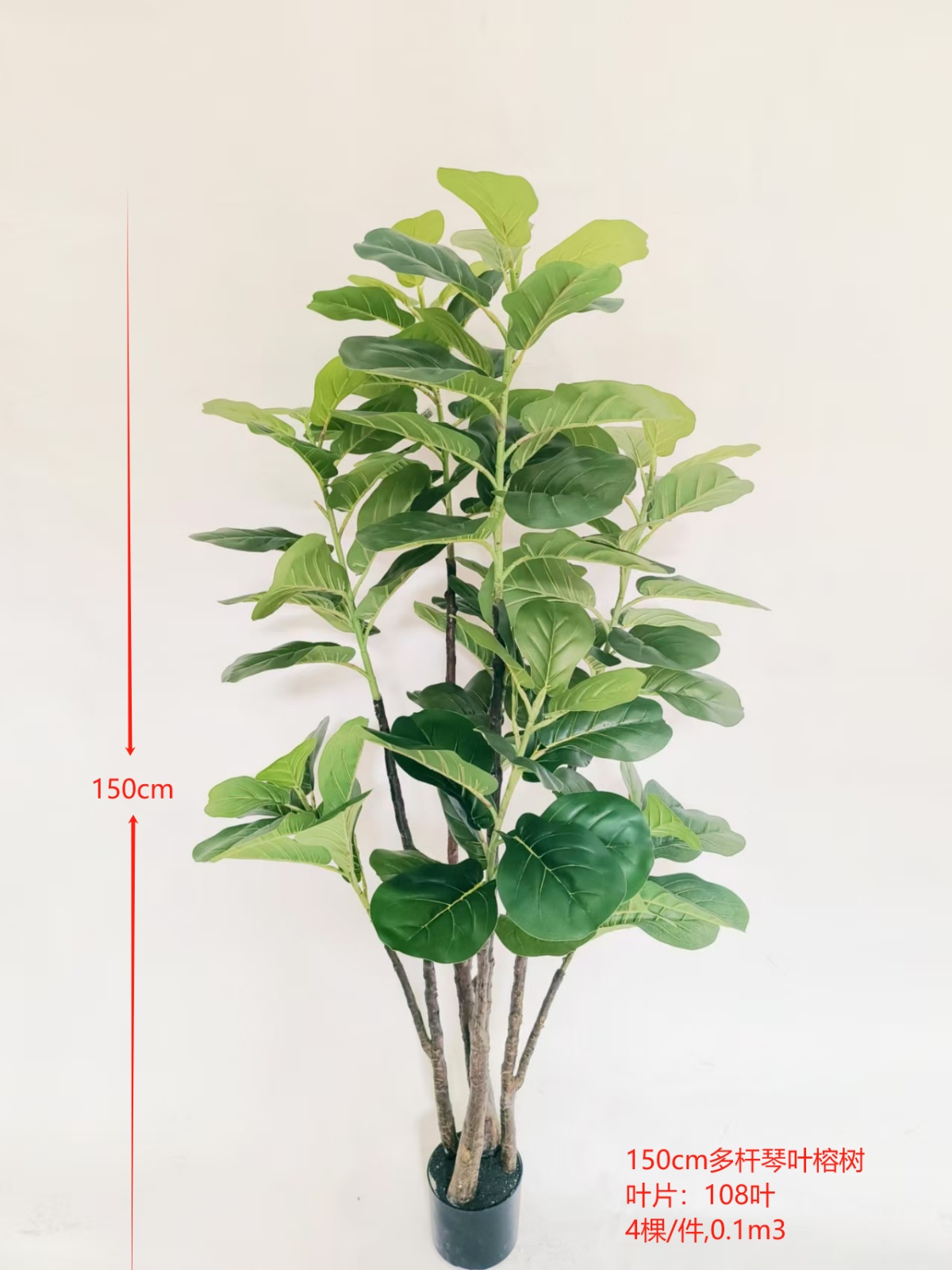
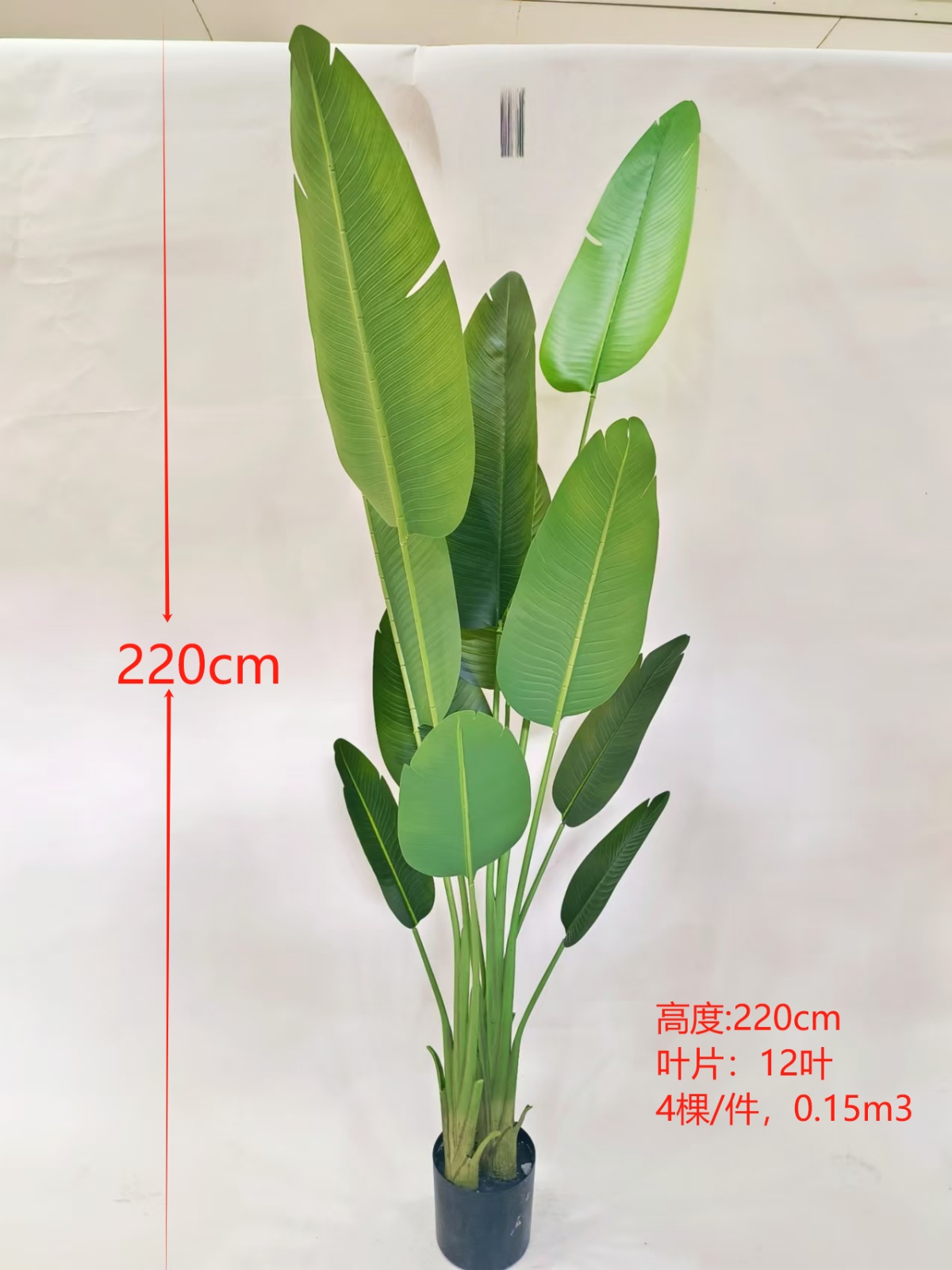
Hospitality is the classic application, and height is the first specification decision. For standard lobbies, trees in the 150-180 cm range read well beside reception desks and lounge seating — a 180 cm areca palm (SKU XJHH25042906-180) or a 150 cm multi-stem ficus lyrata (SKU XJWBX22094, 108 leaves) both hold their own at human scale. For double-height entrance zones and atriums, you need the 2 m class: a 220 cm traveler's palm (SKU xjlsy240913-220) keeps its proportions in tall volumes where a 150 cm tree would look lost.
Very tall statement trees for atriums are usually built from custom trunk assemblies rather than single molded pieces. If your project needs them, describe the ceiling height and sight lines to your supplier before asking for a quote — the answer changes the whole product.
Restaurants and elevator lobbies sit in between: 120-150 cm pieces with dense canopies, like the two-cane ficus lyrata at 120 cm (SKU XJHXQ05010-120), work where guests are seated close and will notice leaf detail at arm's length. That is where real-touch finishing stops being a luxury and becomes a requirement.
Retail, offices and restaurants
Chain retail buys artificial greenery for a different reason: repeatability. A store-fitout package that includes the same monstera bundle at every cash desk, the same dracaena at every entrance, keeps the brand environment uniform across the estate — and reorders are trivial because the SKU already exists.
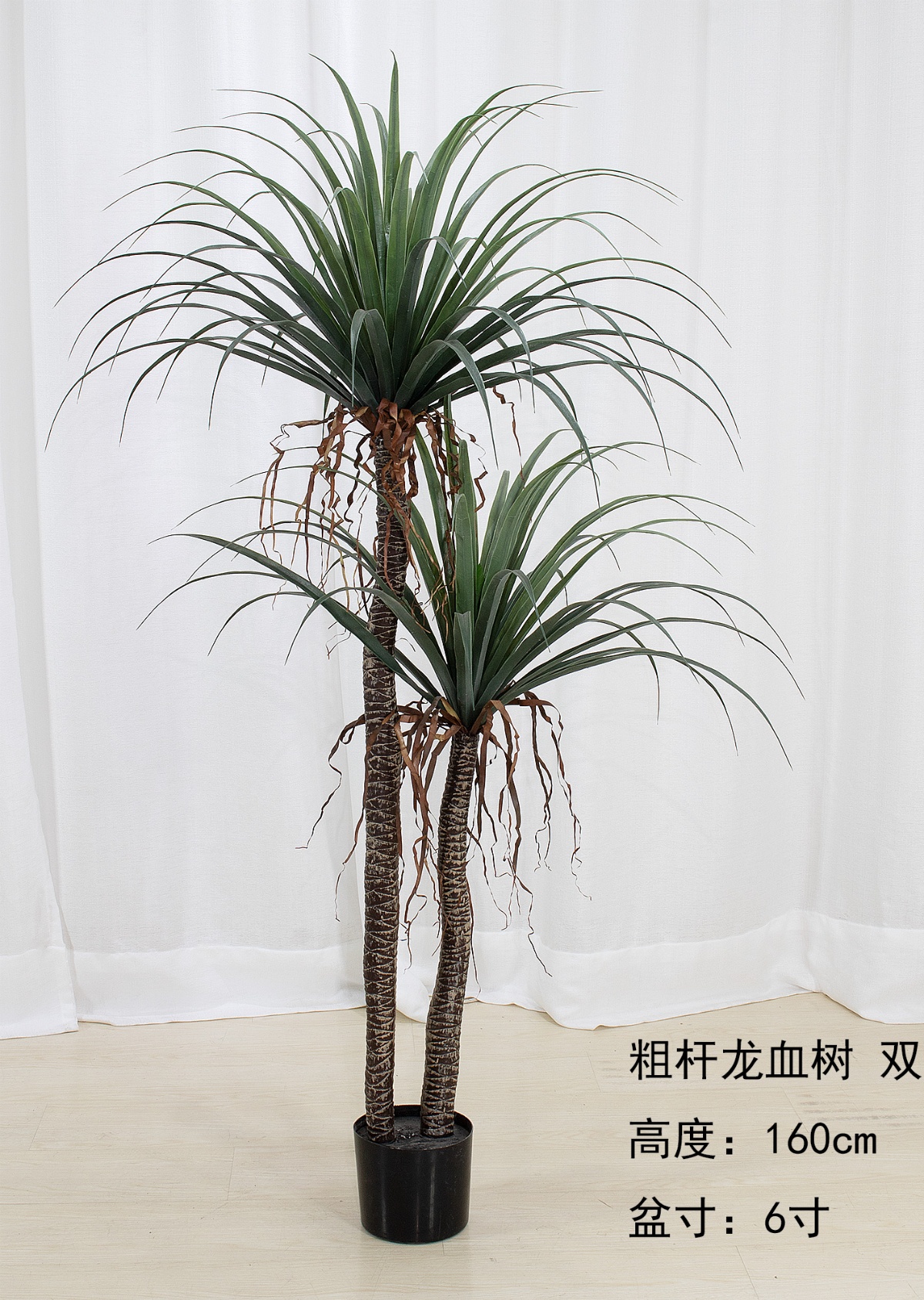
- Offices: corridor and workstation greenery with no watering contract; 160 cm two-cane dracaena (SKU XJDS0622-160-2) is a workhorse for this.
- Restaurants and cafés: shelf and table greenery — 110 cm monstera bundles (SKU XJ04012-1) — plus one or two taller anchor trees.
- Malls and exhibition stands: high-impact, high-volume pieces where fire-safety rules of the venue govern what can be installed.
Specifying trees for a project: the five checks
- Height and canopy density. Ask for leaf counts, not just height. A 150 cm ficus with 108 leaves and a 150 cm ficus with 46 leaves are different products at different price points.
- Pot or no-pot. Many models ship with a basic weighted pot or with none at all. If the project planter is being sourced locally, ordering the no-pot version saves carton volume and avoids double-packing.
- Finish. Standard PVC/PE foliage versus real-touch finish for pieces guests can reach.
- Environment. Indoors with AC, behind full-sun glazing, or genuinely outdoors? Say so in the inquiry. Material and color specification must match the installation environment, and any certificates or performance claims are confirmed against the destination country and the project specification, in writing, before the order is placed.
- Reference codes. Cite the exact SKU and internal color codes on the purchase order so the production batch — and every future reorder — matches the approved sample.
Container math: the check buyers skip
Freight is where artificial tree projects quietly lose money, because carton volume varies enormously between models. Three real examples from current product pages:
| Model | Height | Packing | Carton CBM |
|---|---|---|---|
| Ficus lyrata multi-stem (XJWBX22094) | 150 cm | 4 pcs / ctn | ~0.12 m³ |
| Areca palm (XJHH25042906-180) | 180 cm | 4 pcs / ctn | ~0.15 m³ |
| Dracaena 2-cane (XJDS0622-160-2) | 160 cm | 4 pcs / ctn | ~1.16 m³ |
The dracaena ships with its full planter, which is why it takes nearly ten times the volume of the ficus per carton. On a 20-foot container (roughly 28 usable CBM) that difference decides whether you land 200 trees or 20. Confirm current pcs-per-carton and CBM on the product page or with your sales contact before quoting freight — packing specs are revised between production runs. For a fuller treatment of MOQ and shipping structure, see our guide on MOQ and shipping for wholesale artificial plants.
Working with a factory-direct supplier
For project buyers, the practical workflow is straightforward: shortlist models from the catalog, view physical samples in the Yiwu showroom or request samples by courier, seal an approved sample per color before mass production, and tie every purchase order to the exact SKU and color codes. Production is backed by our own factory, so specification questions go to the people making the product, not to a trading desk.
If you are building a product range rather than fitting out a single project, our hotel lobby selection guide covers how to choose species and heights for hospitality environments in more depth.
Ready to specify? Browse the artificial tree catalog or send an inquiry with your project's heights, quantities, and installation environment — you will get a specification-based answer, not a catalog dump.