UV-Resistant Artificial Plants: An Outdoor Durability Guide for B2B Buyers
Sunlight is the quiet enemy of artificial greenery. Indoors, a good artificial tree can look identical for years; outdoors, the same material can fade, chalk or turn brittle within a single season if it was never designed for that duty. For importers, landscapers and fit-out teams specifying greenery for facades, terraces and poolside areas, understanding what "UV-resistant" actually means — and what it does not — is the difference between a project that still looks fresh at handover and one that triggers complaints.
Why UV Matters More Than Price in Outdoor Projects
Ultraviolet radiation breaks down the polymer chains and pigments in plastics over time. The visible results are fading color, a chalky surface texture and, in advanced cases, brittleness that cracks leaves at the stem. The effect is strongest in high-sun markets: the Gulf region, the southern United States, North Africa and the Mediterranean all deliver far more UV load than a European showroom ever will.
This is why experienced buyers treat UV performance as a specification item, not a marketing adjective. Two products can look identical in a warehouse photo and behave completely differently after six months on a south-facing elevation.
What "UV-Resistant" Actually Means
In practice, UV resistance comes from stabilizer additives blended into the raw material — not from a coating sprayed on afterwards. A UV-stabilized leaf keeps its color longer and resists surface degradation, but the degree of protection depends on:
- The additive package — how much stabilizer is compounded into the plastic, and its quality.
- The pigment — saturated, dark tones tend to show fading sooner than lighter, muted greens.
- The exposure — altitude, latitude, orientation and reflected heat from paving or glass all change the real-world load.
Because the protective effect is gradual rather than absolute, "UV-resistant" is a spectrum, not a switch. That is exactly why test standards exist.
The Standards Buyers Usually Reference
You do not need a laboratory to specify outdoor greenery, but you should recognize the names that appear in tender documents:
| Standard | What it covers |
|---|---|
| ISO 4892 | Exposure of plastics to laboratory light sources (xenon-arc and fluorescent UV) |
| ASTM G154 | Operating fluorescent UV lamps for exposure of nonmetallic materials |
| ASTM D4329 | Fluorescent UV exposure of plastics, widely cited in North American specs |
| ISO 105-B02 | Blue wool scale for grading color change — often referenced to describe how much fading is acceptable |
These standards describe how a material is exposed and how the result is measured. They do not, by themselves, define a product class or a warranty period. A meaningful specification reads like: "tested per ASTM G154, X hours, delta-E color change below Y" — with the values set by the project owner. Which method, exposure duration and acceptance level applies must be confirmed according to the destination country and the project specifications; there is no single global rule.
Plan Placement as a Tiered Decision
The single most useful exercise before ordering is to grade every installation point by how much sun it actually receives:
- Fully exposed — south-facing facades, rooftops, pool decks. Highest UV and heat load; material selection and UV stabilization matter most here, and expectations should be set accordingly.
- Covered outdoor — terraces, colonnades, under canopies. Moderate load; most foliage types perform well with sensible material choices.
- Indoor near glazing — lobbies with floor-to-ceiling windows. Often underestimated: glass filters some UV but not all, and reflected heat adds up.
Design choices stretch any material's life. Lighter, matte greens read as fading less than saturated tones; rotating or replacing the most exposed units keeps mixed installations looking uniform; and planning for phased replacement avoids the "patchwork" effect where old and new units sit side by side.
What to Confirm With Your Supplier Before Ordering
- Where each unit will actually be placed, and for how long it is expected to serve.
- Which test method, exposure hours and acceptance level the project owner requires, if any.
- Whether UV-stabilized material is available for the specific SKUs in your order — availability varies by product and must be confirmed per SKU.
- A weathered sample or a reference installation, for large exposed projects.
- Batch color consistency over time, so that a reorder two years later does not visibly clash with the original installation.
Commonly Specified Products for Outdoor-Style Projects
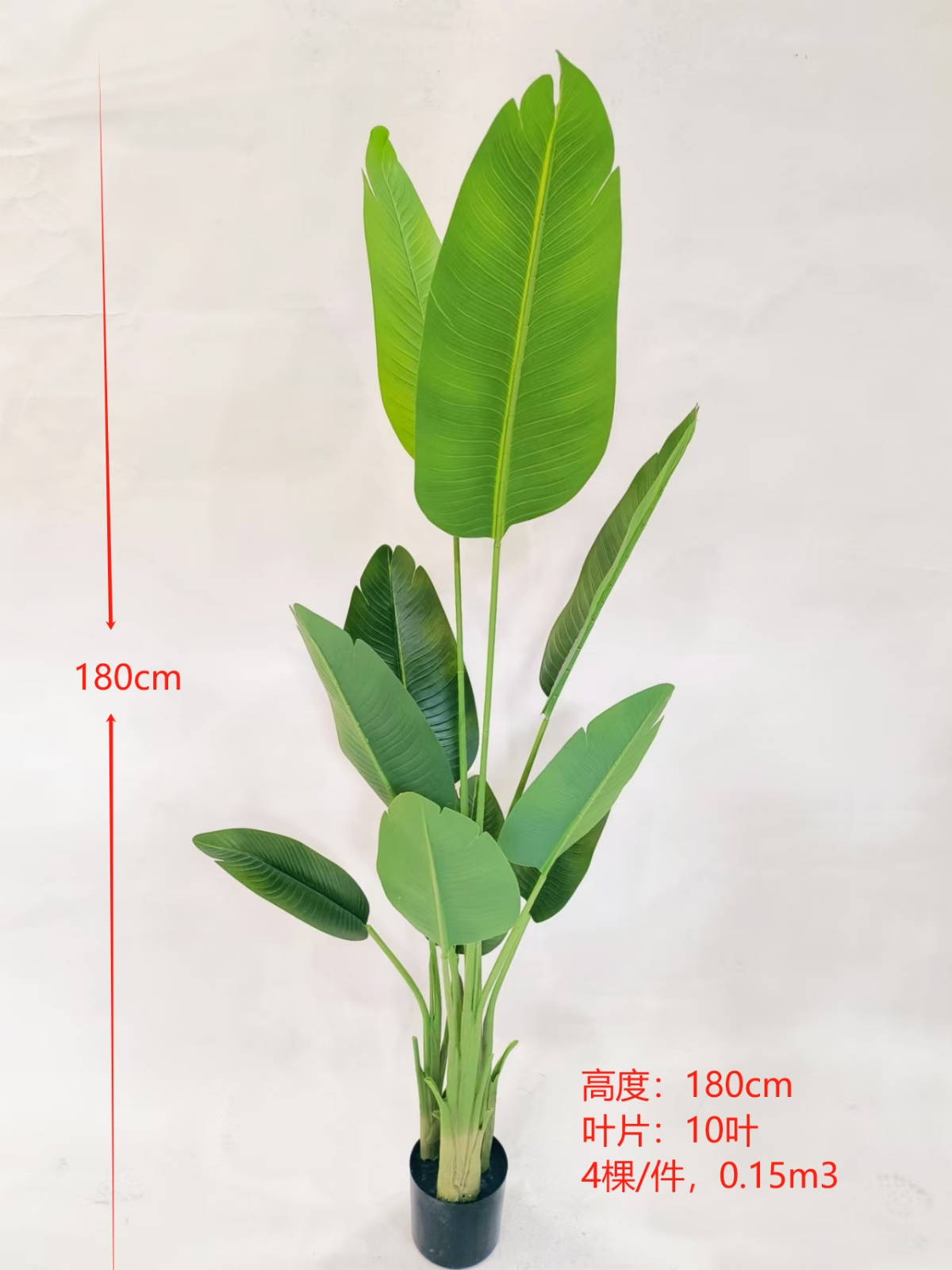
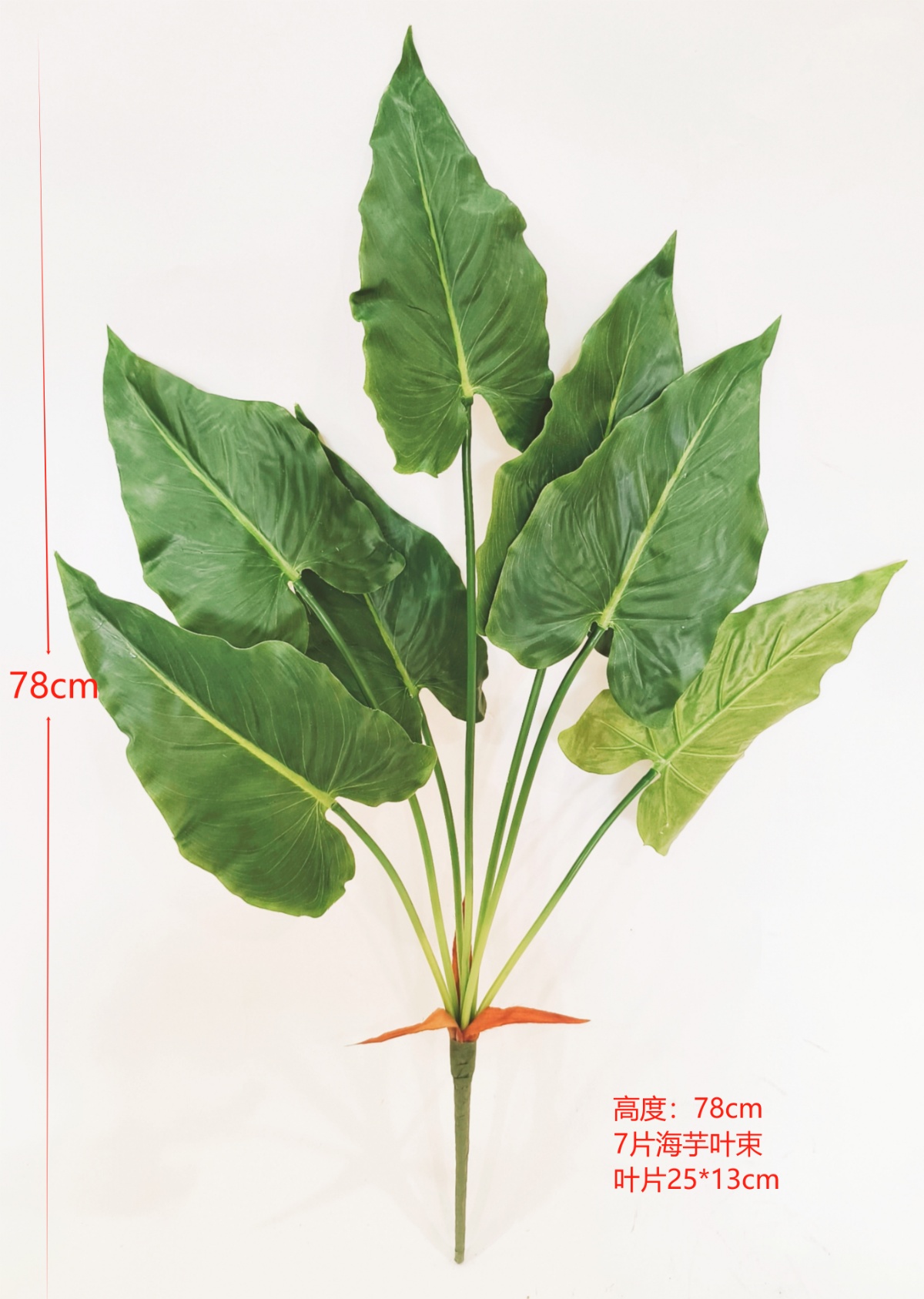
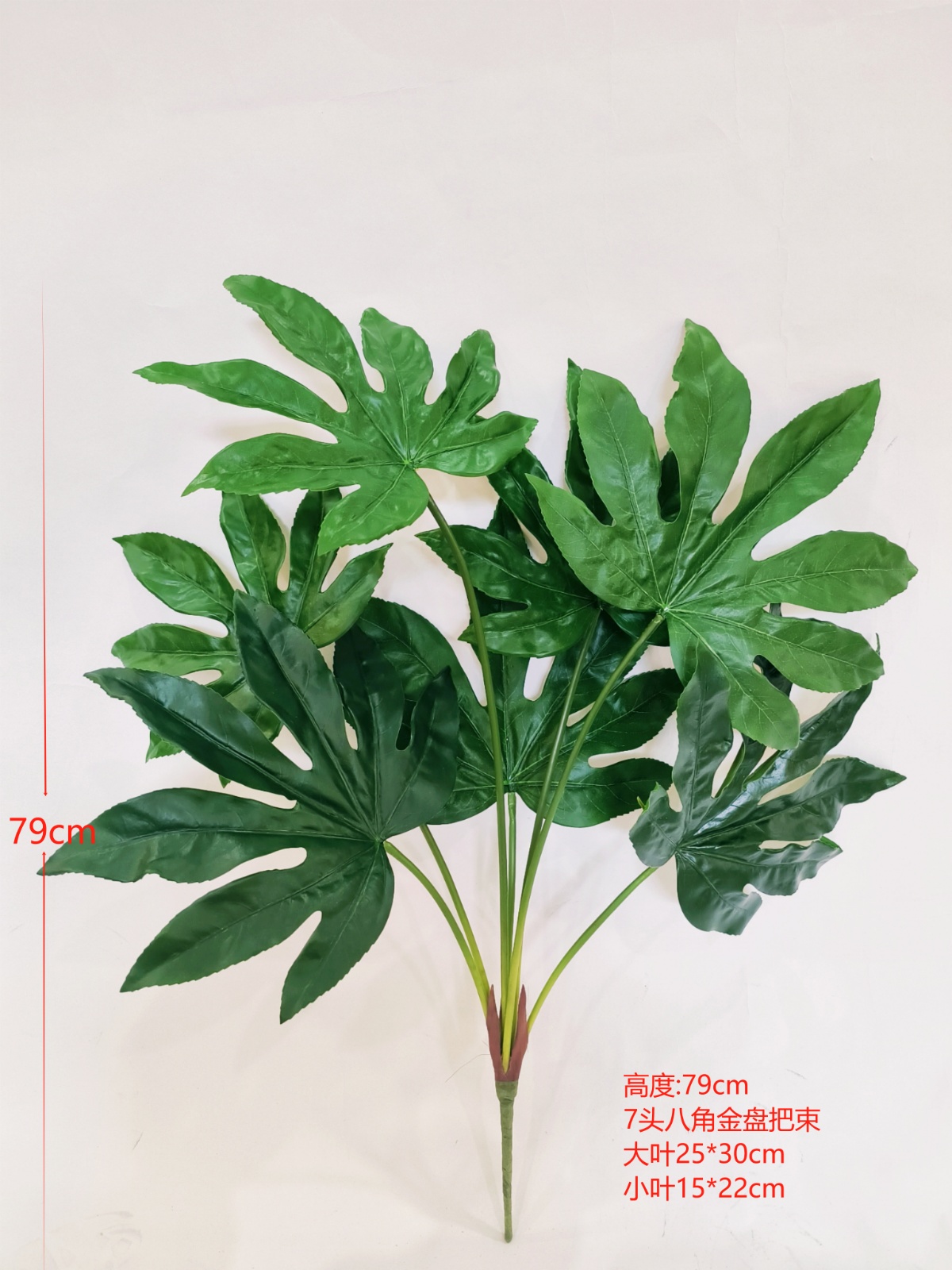
Products from our range that buyers frequently use in covered-outdoor and exterior-style landscape schemes include a 180 cm three-stem traveler's palm (10 leaves, 4 pcs per carton, approx. 0.165 m³ per carton, MOQ 40 pcs), 31" seven-head alocasia real-touch bundles (24 pcs per carton, approx. 0.26 m³ per carton, MOQ 120 pcs) and 31" seven-head fatsia japonica real-touch bundles (20 pcs per carton, approx. 0.26 m³ per carton, MOQ 100 pcs). Availability, material options and any UV-related test documentation for each SKU must be confirmed according to the destination country and the project specifications before ordering.
The bottom line: UV resistance is specified, not assumed. Grade your placement, name the test method and acceptance level, and confirm material options per SKU — that short conversation before the order is what keeps an outdoor installation looking new years later.