Fire-Rated Artificial Plants: A B2B Buyer's Guide to Flame-Retardant Standards
If you sell artificial greenery into hotels, malls, airports or any public building, you will eventually meet the same sentence on a tender sheet: "all decorative foliage must be flame-retardant." For many wholesale buyers this is the point where the deal gets complicated — not because fire-rated products are hard to make, but because the requirements were never clarified early enough. This guide explains the standards buyers most often reference, the difference between inherently flame-retardant and treated foliage, and what to confirm with your supplier before the purchase order is signed.
1. Why fire codes reach artificial plants
Decorative foliage sits exactly where fire codes are strictest: lobbies, atriums, corridors and event spaces — places where materials are close to people and evacuation routes. A dried or plastic plant can ignite quickly and spread flame across a wall of greenery in seconds, which is why many building and fire codes treat decorative materials as a regulated category, not an afterthought.
In practice, the requirement reaches you in three common forms:
- Project tenders (hotels, developers, fit-out contractors) specify a fire class for all decorative finishes.
- Local building or fire codes restrict combustible decorations in escape routes and assembly spaces.
- Insurance and brand standards of hotel or retail chains add their own requirements on top of local law.
Which of these applies — and how strictly — depends entirely on the destination country and the project. There is no single global rule, so the only safe approach is to ask for the requirement in writing and design the order around it.
2. The standards buyers most often reference
You do not need to memorize every standard, but you should recognize the names that appear in tenders:
| Standard | Region | What it covers |
|---|---|---|
| EN 13501-1 | European Union | Reaction-to-fire classification of building products (classes A1–F); decorative materials are commonly specified under this system |
| NFPA 701 | United States | Flame propagation of textiles and films; frequently referenced for foliage fabrics and displays |
| BS 5852 | United Kingdom | Ignition resistance for upholstered seating materials; sometimes cited in UK-fit-out projects as a reference benchmark |
| Local building fire codes | Worldwide | National or municipal rules on decorative materials in public buildings |
Two cautions when reading a tender:
- Match the standard to the material and the market. A class written for wall coverings may not be the right test for a pot-grown tree. Ask the project owner which test method and which class, exactly, they need.
- Compliance is always confirmed per order. Certification and test reports must be confirmed according to the destination country and the project specifications — never assumed from a catalog page.
3. IFR vs FR-treated foliage: know the difference
The industry uses two families of flame-retardant foliage, and tenders usually care which one you are offering:
- IFR (Inherently Flame Retardant) — the retardant property is built into the material itself, so it does not wash out or wear off. Usually the safer answer for contract projects.
- FR-treated (topical) — a standard material is dipped or sprayed with a flame-retardant treatment. It can meet requirements at lower cost, but the treatment can be sensitive to humidity, cleaning and time, so re-testing intervals may apply.
Neither option is automatically "better". The right choice depends on the project's fire class, the environment (humidity, cleaning regime) and the budget. What matters commercially is that you know which type you are quoting, and that the offer states it explicitly.
4. What to confirm with your supplier before ordering
Fire requirements fail in translation more often than in production. Put these five points in writing with your supplier:
- The exact requirement — standard name, test method and class from the tender or local code.
- Which material construction the requirement applies to: leaves only, or also trunk, pot, moss and floral foam.
- Documentation — which report or certificate the project owner will accept, and in which language.
- Sample policy — whether a lab report on the material is enough, or the finished assembled product must be tested.
- Reorder consistency — whether the flame-retardant property is inherent (IFR) so future batches match automatically.
A supplier who answers these five points precisely is also the supplier who will not disappear when the site inspection happens.
5. Choosing products for code-sensitive projects
Fire requirements change product selection in quiet ways. Tall interior trees installed in lobbies are the most common ask, and large foliage often needs the flame-retardant conversation first. Three examples from our catalog that are frequently specified for hotel and office projects:
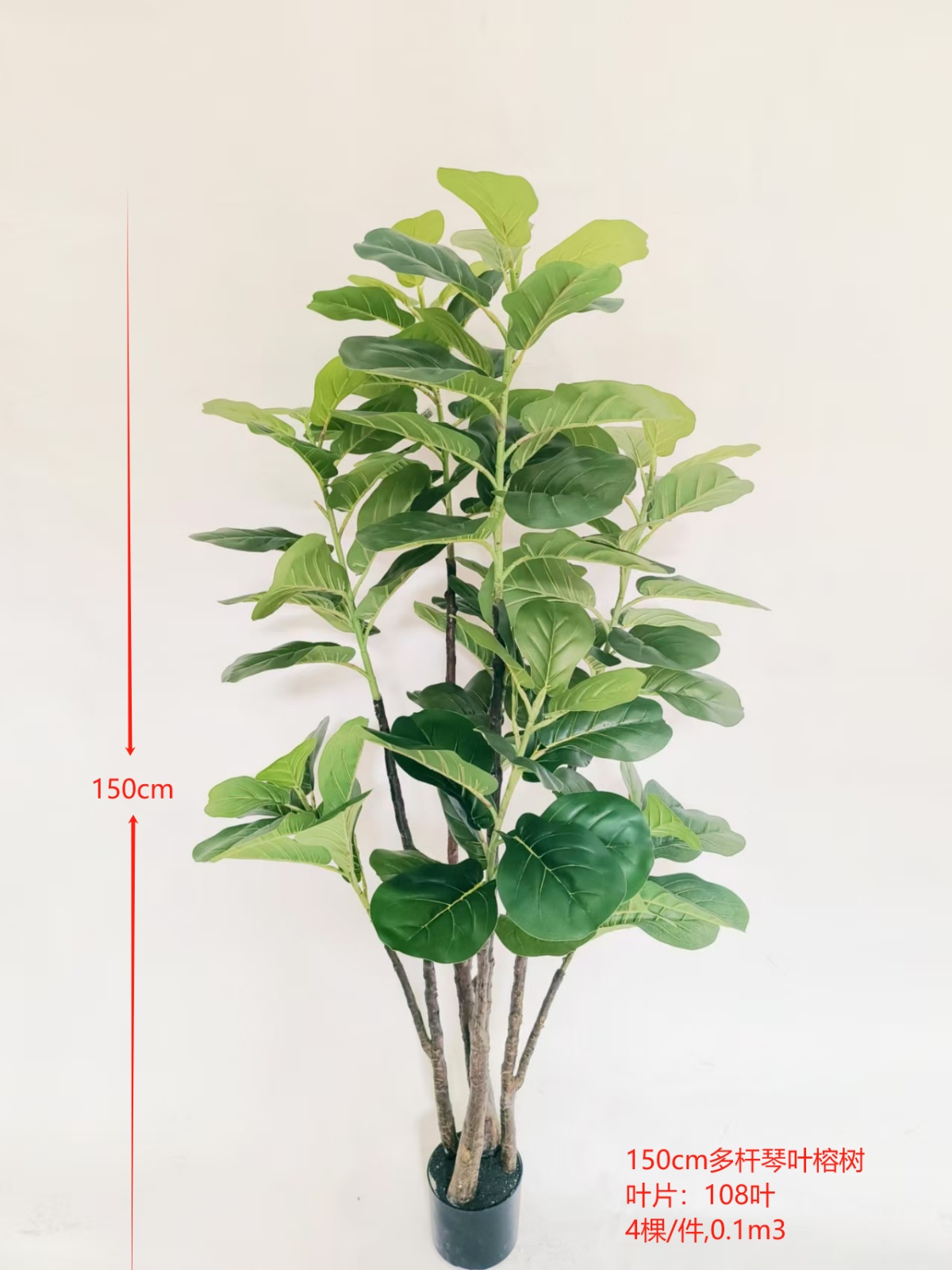
- XJWBX22094 — 150 cm ficus lyrata, multi-stem, 108 leaves. 4 pcs per carton, MOQ 40 pcs. A classic lobby tree with dense foliage, so the foliage material and any fire specification should be agreed early.
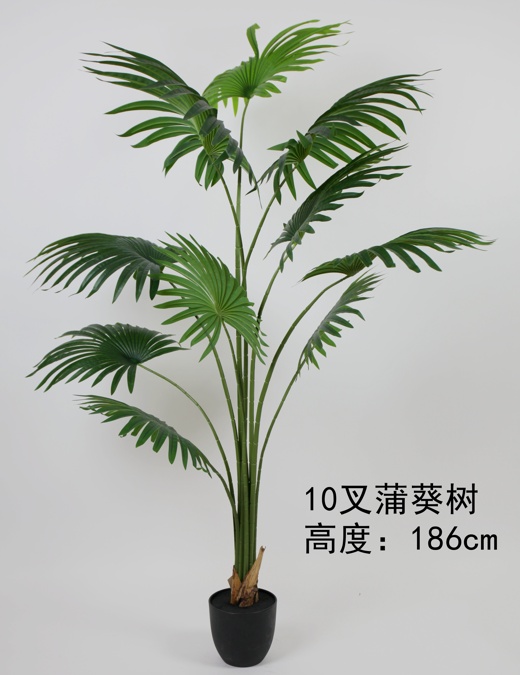
- XJHFW22017 — 186 cm areca palm, 10 leaves. 4 pcs per carton, MOQ 40 pcs. Tall palm silhouette for atriums and entrance groups.
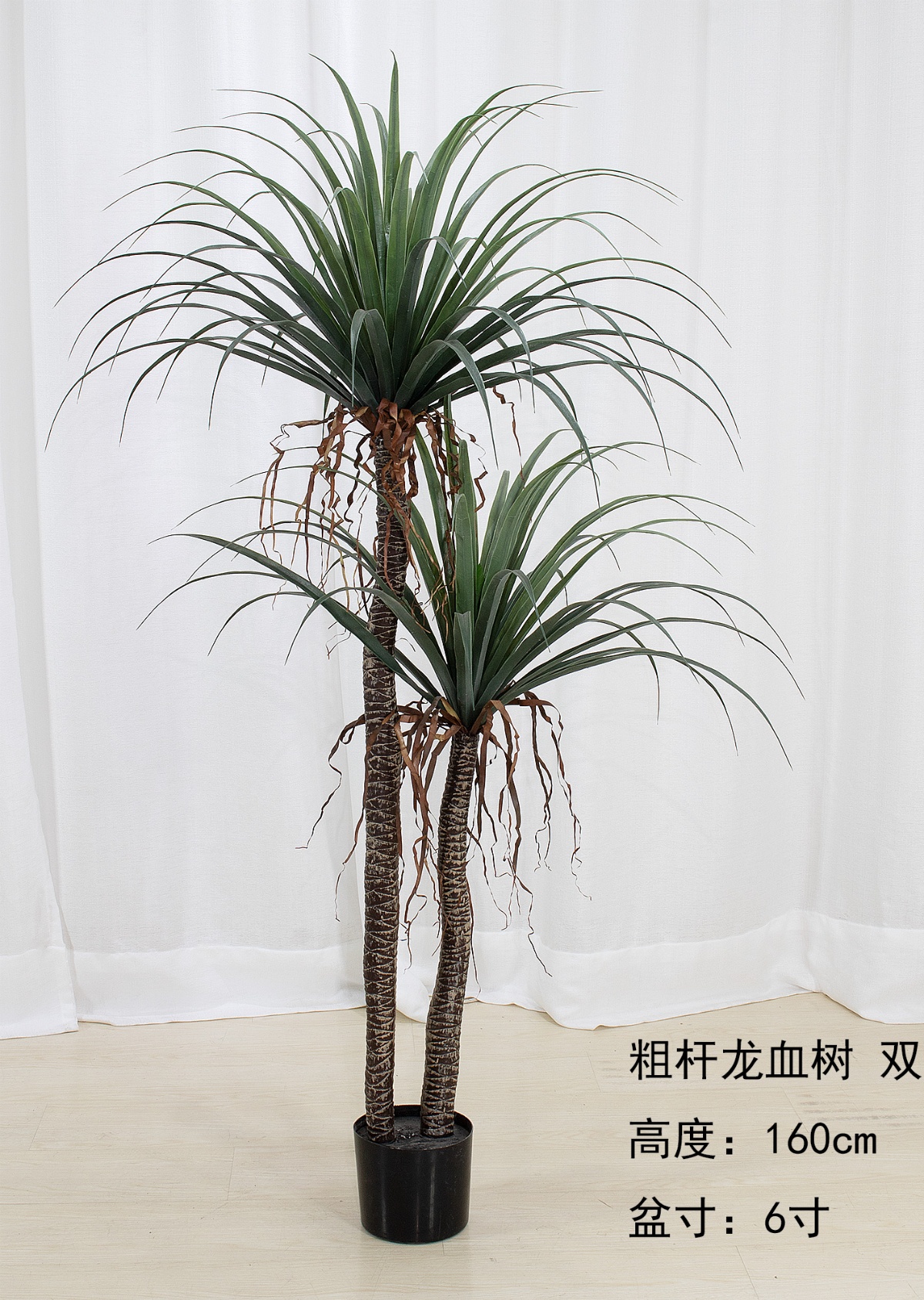
- XJDS0622-160-2 — 160 cm dracaena marginata, 2 stems. 4 pcs per carton, MOQ 40 pcs. Slim profile that fits corridors and tight corners where code compliance is checked most.
All three are indoor trees from our 树 line. For any of them, state the fire requirement in the RFQ — "if flame-retardant foliage is required, please quote with IFR or FR-treated options and the corresponding documentation" — and let the supplier respond with a written confirmation rather than a verbal "no problem".
6. Pre-order checklist for fire-rated greenery
Before you sign, tick every line:
- [ ] Requirement received in writing from the project owner (standard + class)
- [ ] Material scope agreed (leaves / trunk / pot / accessories)
- [ ] IFR or FR-treated option selected and priced
- [ ] Accepted documentation format confirmed per destination country and project spec
- [ ] Approved sample sealed, with the fire specification referenced on the purchase order
- [ ] Reorder batches covered (IFR inherent property, or re-treatment plan)
The bottom line
Fire-rated artificial plants are not a niche product — they are the default requirement for a growing share of contract projects. Buyers who treat fire specifications as a documentation exercise, handled at quotation stage, win tenders that others quietly walk away from. Ask early, write it down, and confirm everything according to the destination country and project specifications.